
Author
Pixels Mark
Release
Intensity
19 MIN READ
No Credit Card Required SVG & PNG Download Free
Makeup artistry is one of the most visually driven businesses in the world. Every image you share, every client you work with, and every booking enquiry you receive begins with how your brand looks before anyone has experienced your work firsthand.
A professional logo signals to potential clients whether you are a serious beauty entrepreneur or someone still figuring things out. In the bridal makeup market, the editorial world, and the growing clean beauty space, that perception gap matters enormously. Brand presentation can shape a potential client's first impression before they explore your portfolio in detail.
Most makeup artists spend hours perfecting their craft but minutes on their brand. Strong branding cannot replace great makeup work, but it can help the quality and positioning of your business feel clear from the first interaction.
This guide covers the makeup artist logo ideas and makeup logo ideas, font choices, color palettes, and branding decisions that work across every MUA niche in 2026.
Why Makeup Artists Need a Professional Logo
The beauty industry is more crowded than it has ever been. Instagram alone has millions of makeup artists sharing work, and potential clients scroll through dozens of profiles before deciding who to contact. Your logo is the first signal they see, and it tells them whether to keep scrolling or stop and look closer.
- Instagram first impressions: Your profile image is your logo. A generic or cluttered mark communicates that the brand behind it is similarly unpolished. A refined logo makes someone pause.
- Booking page trust signals: When a client clicks from Instagram to your booking page, the experience should feel consistent with the brand they just discovered. Using the same professional identity across your social profile and booking page creates a more cohesive path from discovery to enquiry.
- Watermark on portfolio images: Every photo you share publicly is a branding opportunity. A subtle, well-placed logo watermark builds recognition across platforms and protects your work simultaneously.
- Beauty market competition: In a competitive local market, clear branding can help an artist stand apart when potential clients are comparing several similar options.
- Personal beauty brand authority: A consistent logo across your Instagram, website, business cards, and packaging communicates that you are a serious cosmetics brand, not just a freelancer.
Pricing is shaped by many factors, including experience, location, specialization, and demand. Branding does not determine what an artist can charge, but it can help communicate the level of service and positioning behind the business.
25 Makeup Artist Logo Ideas for 2026
Different MUA businesses need different visual languages. Here are twenty-five logo concepts grouped into six style categories that consistently work across makeup artist niches.
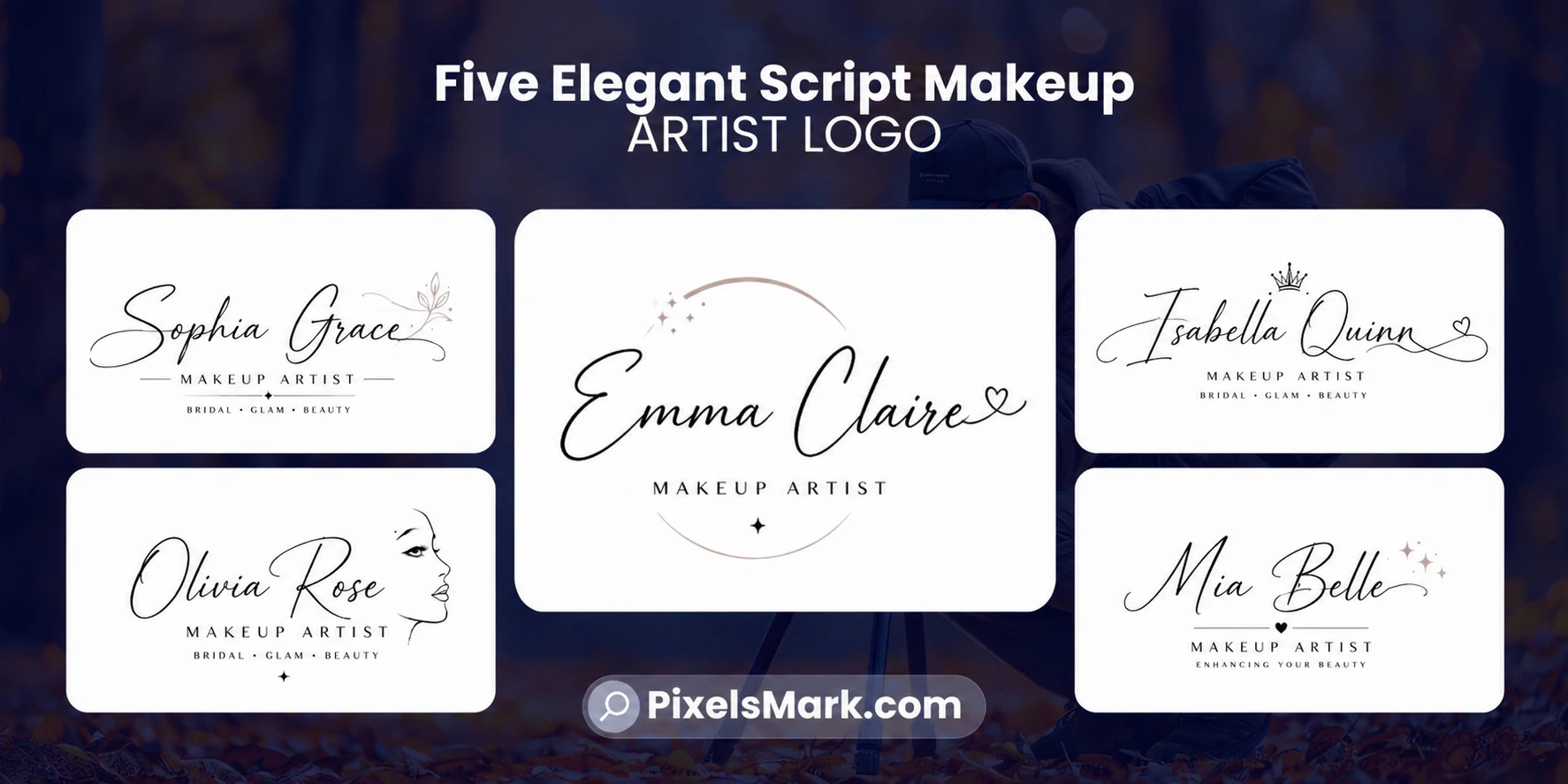
Elegant Script Logos
- 1. Flowing signature logo. Best for: Personal brand makeup artists building warm client relationships. Font: Great Vibes or Pacifico. Vibe: Warm, personal, approachable.
- 2. Italic serif name. Best for: Bridal and luxury MUAs who want warmth with authority. Font: Cormorant Garamond Italic. Vibe: Elegant, refined, premium.
- 3. Double-line script with underline. Best for: Beauty studios wanting a considered, editorial feel. Font: Playfair Display Italic. Vibe: Polished, structured, professional.
- 4. Script name with small star or diamond accent. Best for: Glam-focused artists and bridal specialists. Font: Great Vibes with geometric accent. Vibe: Luxurious, celebratory, feminine.
- 5. Paired script and small sans-serif descriptor. Best for: MUAs who want name recognition plus niche clarity. Font: Script name above Raleway descriptor. Vibe: Personal yet professional.
Minimalist Tool Mark Logos
- 6. Single abstract brush stroke mark. Best for: Modern editorial makeup artists who want something distinctive. Font: Montserrat paired with abstract mark. Vibe: Contemporary, artistic, confident.
- 7. Minimal lip outline reduced to one curve. Best for: MUAs who want a subtle beauty reference without literal clipart. Font: Raleway or Poppins. Vibe: Clean, modern, recognizable.
- 8. Monoline eye sketch. Best for: Eye makeup specialists and editorial artists. Font: Geometric sans-serif at consistent weight. Vibe: Precise, artistic, editorial.
- 9. Abstract star or sparkle reduced to minimal geometry. Best for: Glam artists and bridal specialists. Font: Playfair Display paired with minimal mark. Vibe: Celebratory, premium, modern.
- 10. Single thin line forming an initial. Best for: Personal brand artists who want a mark rather than an illustration. Font: Wordmark in Montserrat beside monoline initial. Vibe: Sophisticated, minimal, designed.
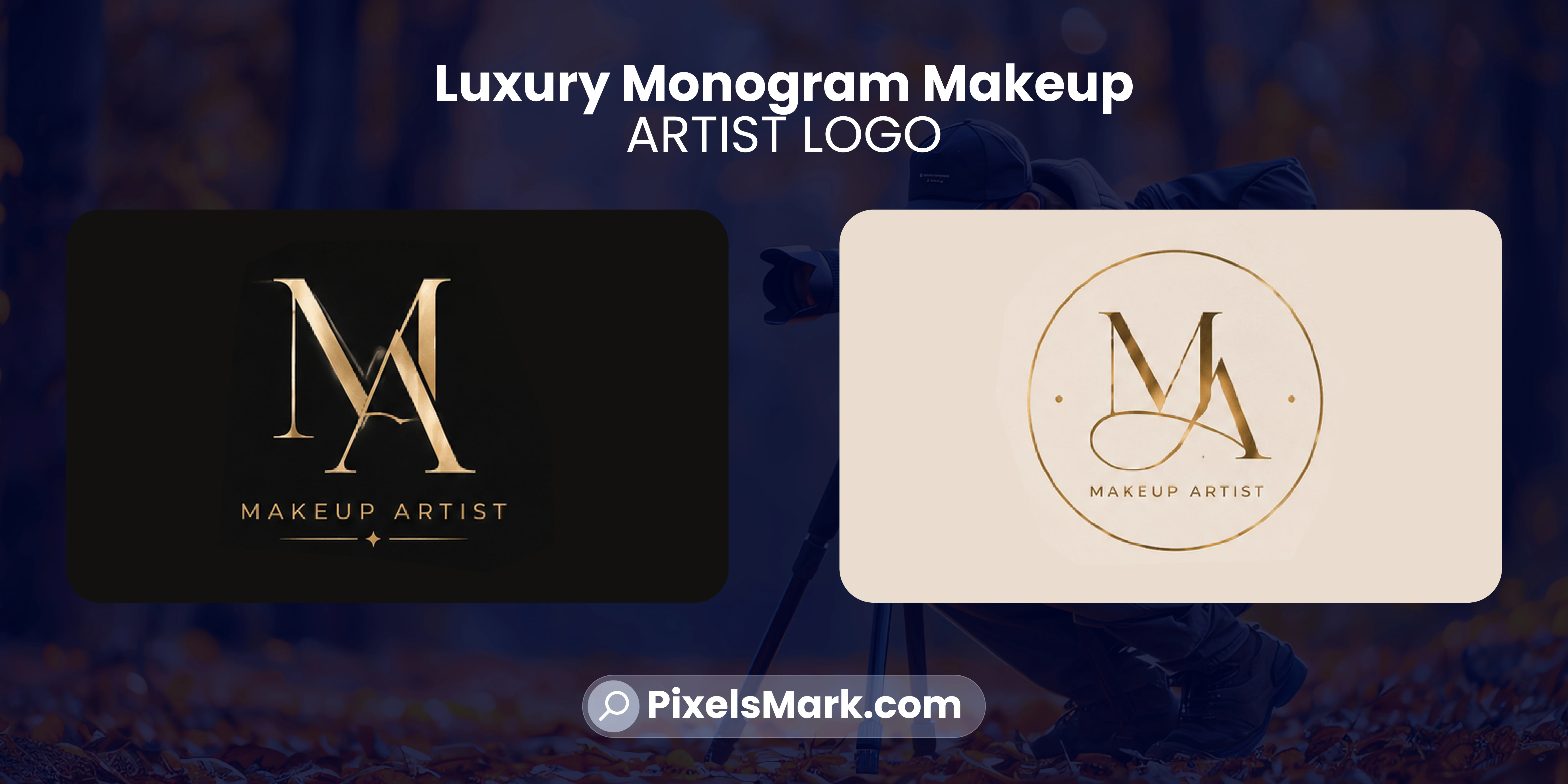
Luxury Monogram Logos
- 11. Interlocking initials with thin strokes. Best for: Premium and high-end MUAs targeting luxury clients. Font: Serif letterforms with consistent stroke weight. Vibe: Exclusive, crafted, premium.
- 12. Initial inside a thin circle or oval border. Best for: Studio brands wanting a compact mark for packaging and profiles. Font: Clean serif initial. Vibe: Heritage, precision, elegant.
- 13. Stacked monogram with generous spacing. Best for: Beauty studio owners who want something editorial and established. Font: Refined serif stacked vertically. Vibe: Authoritative, considered, luxury.
- 14. Script monogram as a single flowing mark. Best for: Bridal makeup artists who want something that feels ceremonial. Font: Flowing connected script letters. Vibe: Romantic, distinctive, premium.
- 15. Diamond-shaped monogram arrangement. Best for: High-end artists targeting fashion and editorial clients. Font: Geometric letterforms inside diamond composition. Vibe: Geometric, elevated, fashion-forward.
Feminine Floral Logos
- 16. Single botanical element beside name. Best for: Natural beauty and clean beauty artists. Font: Cormorant Garamond with minimal blossom. Vibe: Organic, calm, natural.
- 17. Wreath frame around initials. Best for: Bridal MUAs and romantic beauty brands. Font: Script initials inside delicate wreath. Vibe: Romantic, ceremonial, feminine.
- 18. Single flower reduced to geometric abstraction. Best for: Artists who want the floral reference without illustrative complexity. Font: Montserrat paired with geometric floral mark. Vibe: Modern, feminine, considered.
Modern Editorial Logos
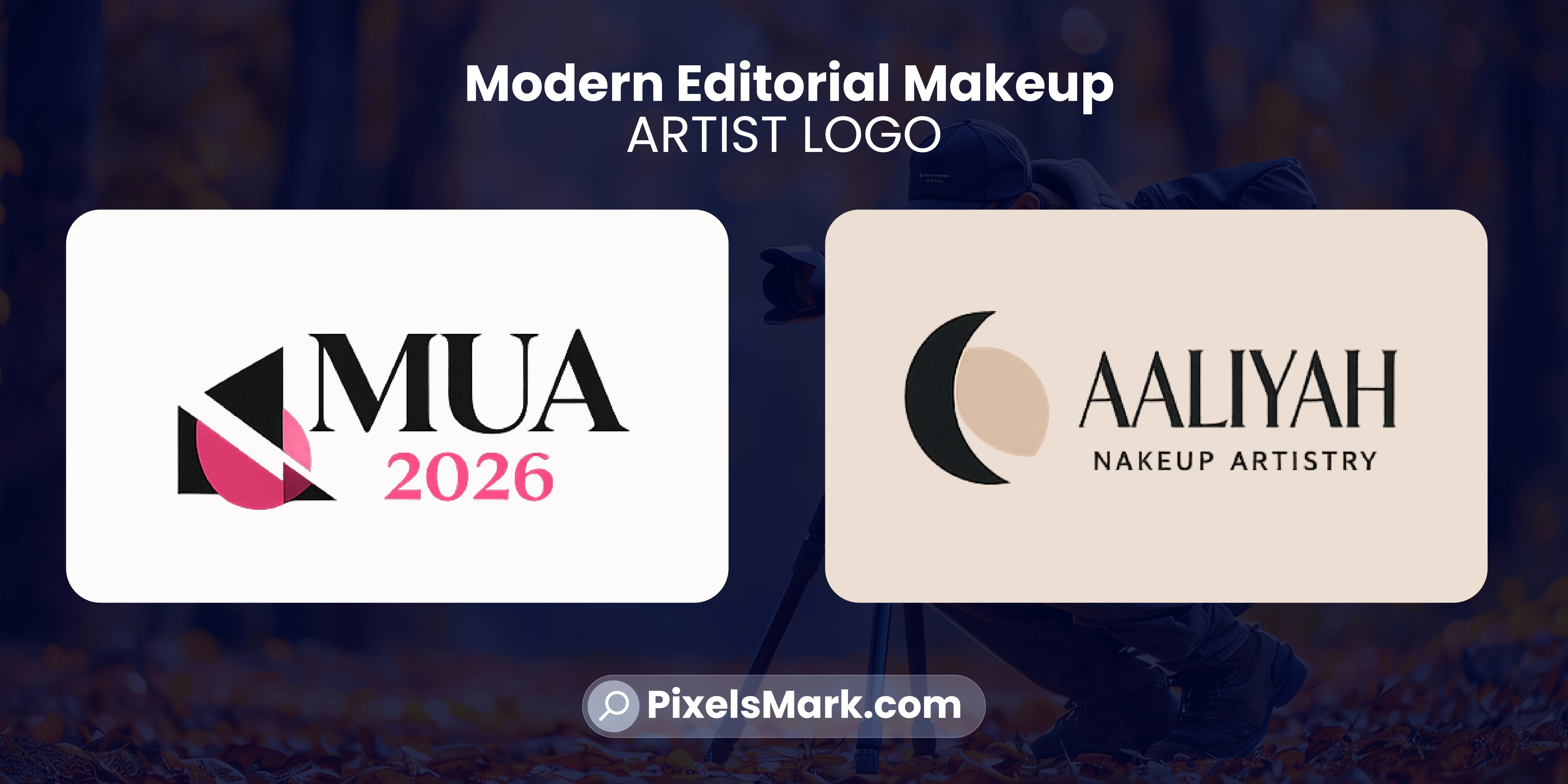
- 19. Bold condensed wordmark. Best for: Film, TV, and fashion MUAs targeting commercial clients. Font: Bebas Neue or Oswald in all caps. Vibe: Confident, commercial, editorial.
- 20. Split letter mark. Best for: Contemporary beauty studios wanting something visually distinctive. Font: Geometric sans-serif letterform split by thin line. Vibe: Modern, graphic, distinctive.
- 21. Typographic studio mark with wide letter-spacing. Best for: Established beauty studios targeting premium markets. Font: Raleway or Montserrat with generous tracking. Vibe: Refined, editorial, professional.
- 22. Geometric eye or face abstraction. Best for: Editorial artists working in fashion and commercial contexts. Font: Wordmark in clean sans-serif below abstract mark. Vibe: Artistic, contemporary, editorial.
Personal Brand Signature Logos
- 23. Full name in refined font with niche descriptor. Best for: Artists building personal brand authority in a specific niche. Font: Cormorant Garamond with small Raleway descriptor. Vibe: Expert, personal, trustworthy.
- 24. First name only in distinctive script. Best for: MUAs known primarily by first name within their local market. Font: Great Vibes or Pacifico at a larger size. Vibe: Warm, memorable, personal.
- 25. Name with certification or award reference. Best for: Licensed estheticians and certified makeup artists whose qualifications are a primary differentiator. For those whose services extend into medical aesthetic treatments, the medical spa logo ideas guide covers the additional clinical trust signals that apply when aesthetic medicine credentials become part of the brand. Font: Clean serif name with small italic descriptor. Vibe: Authoritative, professional, credible.
Makeup Artist Logo Ideas by Niche
The logo style that works for a bridal makeup artist in a luxury market is completely different from what suits an editorial MUA working in film. Here is how branding shifts across the main makeup artist niches.
Bridal Makeup Artists
Bridal clients are making one of the most emotionally significant purchases of their lives. The logo needs to feel warm, trustworthy, and celebratory without being generic. Script logos, floral accents, and blush or gold palettes consistently resonate in this market. The visual language should feel like it belongs in a wedding magazine spread.
Editorial and Fashion MUAs
Fashion and editorial work requires a brand that communicates creative authority and commercial professionalism simultaneously. Bold wordmarks, minimal marks, and high-contrast black and white palettes suit this market. The logo should look at home on a commercial call sheet as easily as it does on Instagram.
Film and TV Makeup Artists
Screen and production clients assess vendors quickly. A logo that communicates technical professionalism and industry experience builds confidence before a conversation begins. Clean, authoritative wordmarks and minimal marks in neutral palettes work consistently in this space.
Natural and Clean Beauty Artists
The clean beauty market has distinct visual expectations. Clients in this space respond to brands that feel organic, considered, and free from excess. Botanical marks, sage and ivory palettes, and refined serif or minimal sans-serif fonts communicate the values this audience prioritizes.
Luxury High-End MUAs
Luxury-focused makeup brands often benefit from a restrained identity that feels intentional and consistent. Refined monograms, sophisticated typography, and controlled color palettes can support premium positioning, but the visual direction should still reflect the artist's actual client experience and style of work.
For beauty salon owners who also offer makeup services, Pixelsmark's beauty salon logo maker offers salon-specific branding styles built around the full beauty service market.
Makeup Artist vs Lash Technician Branding
Many beauty entrepreneurs offer both makeup and lash services, but the two niches have meaningfully different brand expectations. Lash technician branding tends toward minimal, precise visual language because the service is technical and specialized. Clients associate lash work with precision and consistency, so logos in that space often reflect those qualities through clean marks and restrained palettes.
Makeup artist branding has more flexibility. The range runs from warm and personal for bridal work to bold and editorial for fashion and commercial contexts. A makeup artist who also offers lash services may want two distinct brand expressions, or a unified identity that sits at the intersection of both. The positioning decision shapes the brand more than the service list.
For a complete look at how lash branding differs visually, our guide on lash technician logo ideas covers the specific style directions and font choices that work for that niche.
For skin care professionals and licensed estheticians who also offer makeup services, our dedicated guide on logo ideas for estheticians covers branding directions specific to facial studios and skin care practices.
Best Fonts for Makeup Artist Logos
Font choice is where most makeup logo ideas succeed or fail. The right font communicates your positioning before a client reads your name. The wrong font undermines everything else the design achieves.
- Script fonts are the most natural choice for personal brand MUAs. They feel hand-signed and personal, which builds the trust that drives bookings. Cormorant Garamond Italic, Great Vibes, and Playfair Display Italic consistently work well because their stroke weights hold up at small sizes.
- Serif fonts suit luxury and established studio brands. Playfair Display and Cormorant Garamond communicate quality and longevity without the warmth of a script. These work well for beauty studios that want to feel authoritative rather than personal.
- Geometric sans-serif fonts suit modern and editorial MUA brands. Montserrat, Raleway, and Poppins read clearly at any size and feel current without being trendy. They pair well with minimal marks.
Test your chosen font at the small sizes it will actually appear at, including profile-image and watermark scale. If the name becomes difficult to read, simplify the typography or choose a more legible option.
Novelty fonts, those with heavy decorative elements, unusual letterforms, or extreme weights, almost always fail at small sizes. They also date quickly. A font that looks fresh today may feel dated within two years. Stick with fonts that have design longevity.
Best Color Palettes for Makeup Artist Brands
Color is one of the first visual signals a brand sends. Palette choices can support a makeup artist's positioning and niche before a potential client reads the details of the business.
- Blush and gold is one familiar direction for bridal and beauty brands, combining a warm base with a more decorative accent. It works best when those qualities genuinely fit the brand rather than being used simply because they are common in the beauty industry.
- Black and rose gold suits editorial and fashion-forward MUAs. The black base communicates confidence and commercial authority. The rose gold accent adds the warmth and femininity the beauty market expects without softening the overall brand too much.
- Nude and cream works well for natural beauty and clean cosmetics brands. These colors feel considered, calm, and organic. They communicate that the artist prioritizes skin health and natural results over heavy glamour.
- Deep plum and white suits luxury positioning with a dramatic edge. This palette communicates sophistication and works particularly well for high-end studios and MUAs targeting fashion and event markets.
- Sage and ivory can create a clean, minimal, and considered visual direction. This palette can suit natural beauty specialists and clean cosmetics brands when it reflects the wider identity.
Test every palette in black and white before finalizing. If the logo does not communicate clearly without color, the color version will not fix the structural problem. A strong logo works in monochrome first.
No Credit Card Required SVG & PNG Download Free
How to Use Your Makeup Artist Logo on Pinterest and Instagram
A logo that only lives on your website is doing a fraction of its job. For makeup artists, the platforms where clients discover and evaluate you are visual, mobile, and fast-moving. Your logo needs to work in every context those platforms create.
- Instagram profile photo: Your logo or a simplified version of it should be your profile image. If your full wordmark does not read clearly as a small circle, create a simplified mark using your initials or a single brand element specifically for this context.
- Watermark on portfolio images: Keep the watermark visible without letting it compete with the makeup work itself. The right opacity and placement will vary with the brightness, detail, and composition of each image, so test it before publishing.
- Pinterest pin graphics: Your logo should appear consistently on every pin graphic you create, whether that is a portfolio image, a branding tip graphic, or a promotional pin. Pinterest has a longer content lifespan than Instagram, which makes consistent branding even more important there.
- Story highlights covers: Custom story highlight covers using your brand colors and a simplified logo mark create a cohesive profile that signals professional attention to detail.
- Business cards and printed materials: A business card with your logo, your name, your specialty, and a QR code linking to your booking page is still one of the most effective referral tools in the beauty industry. Existing clients pass them to friends after events.
For lash technicians who also offer makeup services, Pixelsmark's lash technician logo maker offers beauty-specific styles that complement makeup artist branding across the same platforms.
For nail technicians who also offer makeup services, our guide on nail salon logo ideas covers the branding directions that work across both beauty niches.
Common Makeup Artist Logo Mistakes to Avoid
- Using literal clipart of lipstick or brushes. Generic beauty tool illustrations are the most common logo mistake in this market. They look like template outputs rather than considered brand decisions. Abstract references or minimal marks communicate the same niche without the clipart association.
- Too many colors. Avoid adding colors that do not serve a clear purpose. A restrained palette is often easier to reproduce consistently across social profiles, websites, print, and other brand applications.
- Fonts that fail at small sizes. A thin script that looks stunning at full size can become unreadable as an Instagram profile image or watermark. Always test your chosen font at the small sizes your audience will actually see before committing.
- Generic template appearance. A logo that looks like every other MUA in your area builds zero brand recognition. Small customizations, a specific color decision, adjusted spacing, a slightly modified element, are enough to make a logo feel owned rather than borrowed.
- Not testing the Instagram profile crop. Your logo will appear as a small circle on your Instagram profile. A horizontal wordmark that reads perfectly on a business card becomes unreadable in a circular crop. Always check your logo at profile image size before finalizing.
How to Create a Makeup Artist Logo
The process is straightforward when you approach it with the right decisions made in the right order.
- Define your brand positioning. Are you a premium bridal specialist, an editorial artist, a natural beauty practitioner, or a luxury studio? This decision determines every design choice that follows.
- Choose your style direction. Based on your niche and the clients you want to attract, decide between script, monogram, minimal mark, or editorial wordmark directions.
- Select your font. Test two or three options at Instagram profile size and watermark size. The font that reads most clearly at small sizes while reflecting your positioning is the right choice.
- Choose your color palette. One or two colors. Test in black and white first. The palette should communicate your niche positioning before any text is read.
- Test at all use sizes. Check your logo as an Instagram profile image, as a business card element, and as a watermark over several light and dark portfolio photos. Make sure it remains clear and recognizable across each context.
- Download in the right formats. Transparent PNG for social media, packaging, and watermarks. SVG for your website and any print applications. Make sure your tool provides both formats.
Pixelsmark's makeup artist logo maker is built specifically for beauty businesses, with styles designed around the visual language makeup artists actually need. It is free, requires no design experience, and exports in both transparent PNG and SVG formats ready for immediate use.
For skincare brand owners who also want a cohesive beauty business identity, Pixelsmark's skincare brand logo maker offers clean, modern styles built for the cosmetics and skincare market.
Makeup Artist Logo Trends for 2026
The visual language of beauty branding is shifting in a clear direction. Understanding where makeup logo ideas are moving helps you build a brand that feels current rather than dated.
- Minimal luxury logos are replacing ornate illustrative marks. Clean lines, refined typography, and restrained detail communicate premium positioning more effectively than complex beauty illustrations.
- Monograms remain a useful direction for personal MUA brands because a compact mark can work across Instagram, Pinterest, packaging, and watermarks.
- Editorial typography is crossing from fashion into beauty branding. Bold condensed wordmarks and wide letter-spaced names signal commercial confidence and creative authority.
- Soft neutral palettes such as nude, sage, ivory, and warm white can support a clean, skin-first visual direction without relying on traditional saturated beauty colors.
- Social-first branding makes small-scale performance especially important. A makeup artist logo should remain recognizable in profile images and watermarks as well as on websites and printed materials.
Frequently Asked Questions
What should a makeup artist logo include?
At minimum, your name or studio name in a font that reflects your positioning and the clients you want to attract. Many makeup artists add a minimal mark, monogram, or subtle beauty reference element. Keep it to one or two elements. Every detail should serve the brand rather than decorate it. The most effective MUA logos are simpler than their creators initially expect.
What font works best for MUA logos?
Script fonts suit personal brand makeup artists who want warmth and approachability. Serif fonts suit luxury and established studio brands. Geometric sans-serif fonts suit modern and editorial MUAs. The choice depends entirely on your positioning and target clients. The non-negotiable rule: test any font at Instagram profile size before committing. Cormorant Garamond, Playfair Display, and Montserrat all perform consistently well across makeup artist contexts.
What colors work best for makeup artist branding?
Blush and gold for premium and bridal positioning. Black and rose gold for editorial and fashion-forward brands. Nude and cream for natural and clean beauty specialists. Deep plum and white for luxury drama. Sage and ivory for clean beauty brands. Always test your chosen palette in black and white first to confirm the logo works structurally before adding color.
Can I use my logo as a watermark on portfolio photos?
Yes. A watermark can help keep your identity attached to portfolio images when they are shared across visual platforms. Export your logo as a transparent PNG and test its size, placement, and opacity against each image. It should remain identifiable without distracting from the makeup work.
How do I create a makeup artist logo for free?
Use a tool built for beauty businesses rather than a generic logo generator. Pixelsmark's makeup artist logo maker is free, exports transparent PNG and SVG files, and includes styles designed for MUA brands rather than generic business templates.
Conclusion
In a market where potential clients make booking decisions based on Instagram profiles and Pinterest boards, your logo is working for you or against you before any conversation begins. A professional makeup artist logo communicates your positioning, signals your quality level, and builds recognition across every platform where clients discover and evaluate you.
Choose a style that reflects where you want to position your beauty business. Test your fonts at the sizes that actually matter. Keep your palette focused. Apply your logo consistently across every platform, every image, and every piece of content you share publicly.
Technical skill and brand presentation play different roles. Strong work gives clients a reason to trust your craft, while a consistent identity helps them recognize and remember the business around it. Branding becomes part of the client experience when it clearly reflects who you are and the kind of work you offer.
For beauty salon owners and skincare brands looking to build a consistent brand identity across their full service offering, Pixelsmark's beauty salon logo maker and skincare brand logo maker offer beauty-specific styles built for each niche.
Related Articles
- Beauty Salon Logo Ideas
- Esthetician Logo Ideas
- Lash Technician Logo Ideas
- Medical Spa Logo Ideas
- Nail Salon Logo Ideas
No Credit Card Required SVG & PNG Download Free